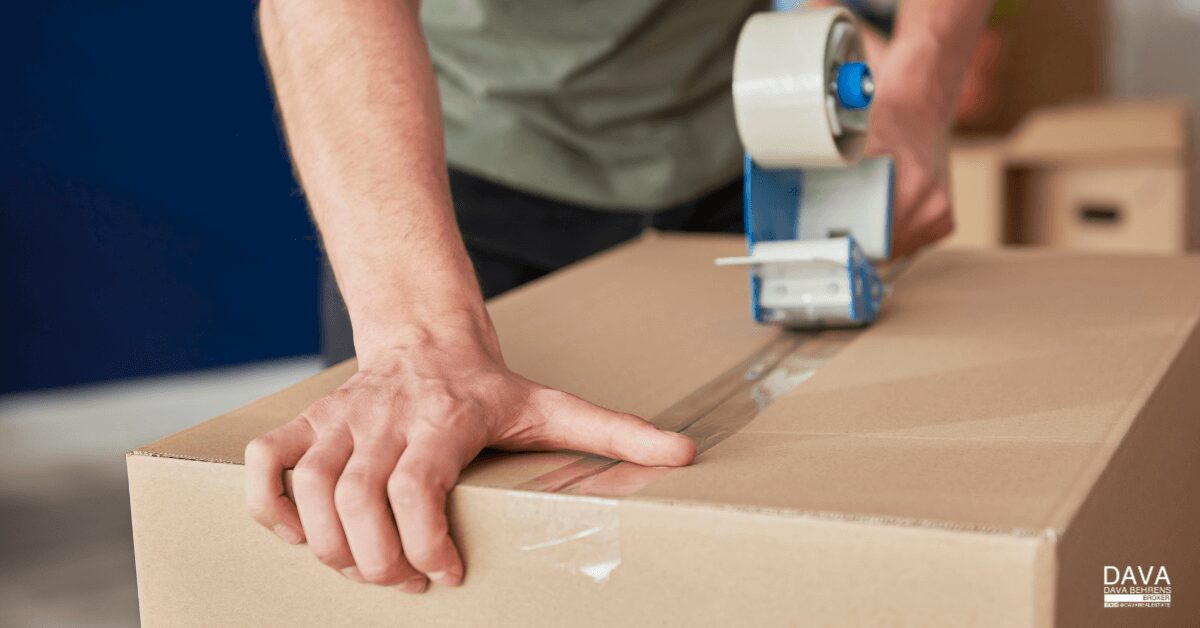
Once possessions are divided into what’s moving to the new home and what’s not, there are choices about what to do with what’s not moving.
- Give to family members
Relatives may find unwanted possessions useful, valuable, or sentimental. Include family as a first step to determine the disposition of items that won’t be moved. - Garage sales and estate sales
Garage sales are good to get rid of junk and are typically organized and held by the homeowner. An estate sale can be a good outlet for more valuable items in the home and is often organized by a professional. - Charitable donations
Organizations from a local church to the Red Cross to Goodwill accept donations. However, they don’t accept everything. What’s accepted can vary by state or region, and the homeowner may need to drop off the donated items or pay a fee for their removal. - “Junk” removal services
Quick and efficient, they will take almost everything that the homeowner doesn’t want. Pricing is based on the volume of material (though some services price by item), and fees are often added for items such as paint or tires. - Self-storage
Storing items can keep them available for future use or help avoid making a hard decision about no longer having immediate access to things. However, self-storage can often be more expensive in the long run than the value of the items being stored.
TIP: Forbes offers an equation to help determine whether storing items makes economic sense:
(VALUE OF ITEMS What your stored items are worth today if sold
MULTIPLIED BY
DEPRECIATION SHIELD How much value storing these items preserves, represented as a percentage. e.g. 5% becomes 0.05)
MINUS
(MONTHLY COST Storage unit’s monthly fee
MULTIPLIED BY
MONTHS How long you intend to use the storage unit)
EQUALS= NET BENEFIT If the net benefit is positive, the storage investment is sound. If the net benefit is negative (net loss), the homeowner is probably better off without it.
Disposing of Household Hazardous Waste
Homeowners should never pour household hazardous waste (HHW) down drains or on the ground– this can harm people, pets, and the environment. Instead look into proper disposal options.
- COLLECTION PROGRAMS
Homeowners can check with their local waste management district or environmental health agency to learn about these programs. Earth911.com also provides results when searching its database. - MAIL-IN DISPOSAL SERVICES
Some companies offer mail-in kits for specific HHW items, like expired medications or mercury thermometers. - RETAIL TAKE-BACK PROGRAMS
Some retailers accept certain types of HHW for recycling, such as used oil and antifreeze. - HAZARDOUS WASTE DISPOSAL FACILITIES
By searching “hazardous waste disposal near me,” the homeowner may find nearby organizations and services to help properly dispose of HHW.
The Center for REALTOR® Development (CRD) confers the Senior Real Estate Specialist® (SRES®) designation, which is an official credential of the National Association of REALTORS® (NAR).